
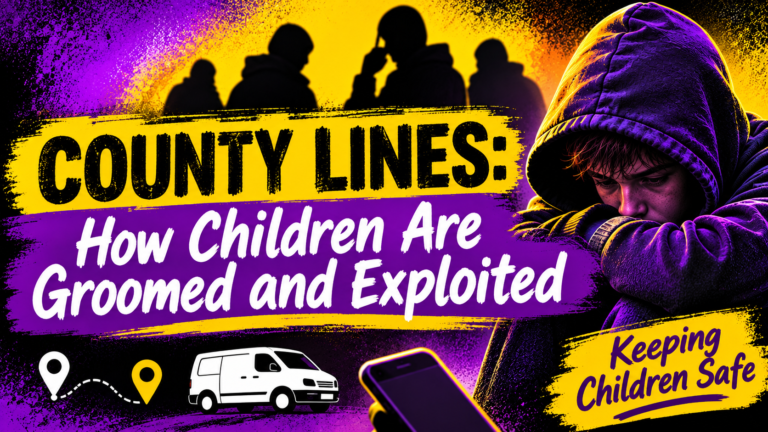
What do we mean by county lines?
County lines is a term used for a model of drug supply in which criminal networks use dedicated telephone lines or other communications to arrange distribution, often across geographical areas. Children and vulnerable adults may be recruited to transport drugs, money or other items, store goods or carry out tasks for people who control the operation.
It is important to understand that exploitation can take place close to home as well as across county boundaries. A child does not need to travel to another town to be at risk. Criminal exploitation is about how someone is pressured, manipulated or controlled for another person’s benefit.
Grooming often begins with something that feels positive
Grooming does not always begin with threats. Someone may offer friendship, attention, gifts, lifts, money, protection or a sense of belonging. A young person may feel noticed or respected for the first time. What initially looks like a favour can gradually become an expectation.
An older individual might ask a child to hold an item, deliver a package or introduce a friend. Later, they may claim the child owes money, has lost something valuable or must complete another task to make things right. Fear, shame and threats can make it difficult to leave or tell an adult.
Why children may not recognise exploitation
Young people may describe the relationship as friendship, employment or loyalty. Some believe they are making independent decisions, even when an adult or more powerful peer is controlling the choices available to them. Others are frightened of retaliation or believe they will be blamed if they speak up.
A child can be exploited and still engage in harmful behaviour. Safeguarding requires us to recognise both the harm a child may experience and the risks their actions can create for others. This is why a response based only on punishment may miss the people directing the exploitation.
Signs that deserve curiosity, not assumptions
Changes in attendance, unexplained absences, new possessions or money, multiple phones, secretive communication, older associates, unexplained travel, anxiety, injuries or sudden changes in behaviour can all justify a conversation. None of these signs proves county lines involvement on its own.
Professionals should record factual observations, follow safeguarding procedures and consider the wider context. Parents and carers can start with calm, open questions rather than accusations: “I’ve noticed you seem worried lately. Is someone putting pressure on you?” A young person is more likely to speak when they believe they will be listened to.
What to do if you are concerned
If a child is in immediate danger, call 999. Otherwise, parents should contact the school’s designated safeguarding lead, local children’s services or the police where appropriate. Children can speak to a trusted adult or contact Childline on 0800 1111. Do not confront a suspected exploiter or attempt to investigate a network yourself.
If a child discloses exploitation, stay calm, listen without promising secrecy and explain that information may need to be shared with people who can help keep them safe. Follow local safeguarding procedures and preserve relevant information without putting the child or yourself at risk.
Why prevention should begin in primary school
By Years 5 and 6, children may already be navigating complicated online and offline relationships. Prevention at this stage should be age-appropriate and should build understanding rather than frighten children. Topics include safe and unsafe friendships, grooming, pressure, secrets, belonging, trusted adults and help-seeking.
On The Verge’s Primary County Lines Prevention programme is designed to give children practical language and tools for recognising manipulation and seeking help. We also recognise the role of parents, carers and school staff. Children need consistent messages and trusted adults around them, not a one-off warning that ends when the workshop finishes.
Find out more
Ask about On The Verge County Lines prevention workshops for primary schools and families. Visit www.ontheverge.uk to find out more or contact the team.
On The Verge UK CIC | BELIEVE • LEARN • GROW