
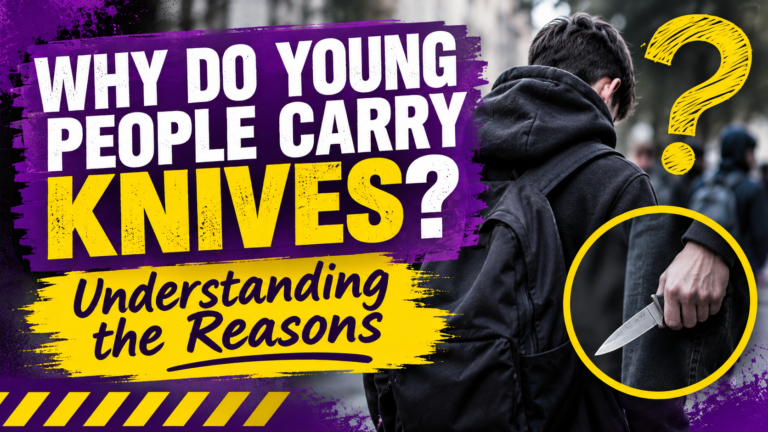
There is no single explanation
When a young person is found carrying a knife, the immediate priority must be safety. But if our only response is to condemn the act, we may miss the opportunity to understand why it happened and how to prevent it happening again.
Young people carry weapons for different reasons. Some describe fear and a belief that carrying will protect them. Others face threats, pressure from peers, conflict, exploitation or a desire for status. Some may not fully understand the legal and personal consequences. These explanations do not excuse weapon carrying; they help identify where intervention is needed.
Fear can become a dangerous cycle
A young person who feels unsafe may believe a knife will make them safer. In reality, the presence of a weapon can increase the risk of serious injury, escalation and life-changing consequences. A disagreement that might otherwise end in words or a minor confrontation can become irreversible.
Adults need to challenge the belief that carrying a knife is protection, while taking seriously the reasons a young person feels threatened. Telling someone “just don’t carry” is unlikely to be enough if they still believe they have no safe way to travel, leave a conflict or ask for help.
Peer influence and belonging matter
Adolescence is a time when identity, reputation and belonging can feel particularly important. Young people may worry about appearing weak, losing friends or being targeted if they refuse a request. Online arguments and public humiliation can add pressure by making conflicts visible to a much wider audience.
We need to help children rehearse practical responses: how to walk away, how to seek support, how to manage pressure, and how to avoid being drawn into situations where a weapon is present. The goal is to build confidence and safer choices, not to shame young people for being afraid.
The consequences affect more than one person
Knife crime can devastate victims, families, witnesses and entire communities. It can also change the life of the person who carried the weapon, including through criminal proceedings, trauma, loss of education and long-term consequences for relationships and future opportunities.
Prevention must keep victims at the centre of the conversation. At the same time, recognising the circumstances around a young person’s choices is essential if we want fewer future victims. Accountability and effective prevention should reinforce one another.
What parents, schools and communities can do
Start conversations before a crisis. Ask young people where they feel safe and unsafe, what happens when arguments escalate and who they would contact if threatened. Create opportunities for trusted conversations without immediately turning every disclosure into a lecture.
Schools can integrate weapons awareness into wider work on emotional regulation, peer pressure, conflict and safeguarding. Youth workers and mentors can build relationships that make it easier to discuss fear and risk. Community partners can help make safer alternatives visible and accessible.
Education and practical action
On The Verge delivers Weapons Awareness education and supports weapon amnesty bin initiatives in Leeds. Education helps young people understand the risks and consequences of carrying weapons; community disposal initiatives offer another route for reducing weapons in circulation.
Anyone considering disposing of a weapon should follow the specific instructions for the relevant scheme and seek police advice if unsure. Do not carry a weapon to a location without checking the lawful and safe procedure. The wider message remains clear: a safer community depends on early conversations, trusted relationships and coordinated action.
Find out more
Explore On The Verge Weapons Awareness sessions and information about local weapon amnesty initiatives. Visit www.ontheverge.uk to find out more or contact the team.
On The Verge UK CIC | BELIEVE • LEARN • GROW